Home / First trade / Picking the right network
Picking the right network when you withdraw
It matters far more than the amount field and sits collapsed below it. Here is what it asks, what happens when it is wrong, and how to make checking automatic.
The network dropdown on the withdrawal page decides whether your money arrives. Getting it wrong usually means the funds cannot be recovered. It matters far more than the amount field, and it often sits collapsed below it, easy to skip past.
This piece is about that dropdown: what it is asking, what happens when it is wrong, and how to turn checking it into a fixed action.
What the dropdown is asking
The same asset can exist on several chains. USDT has a version on Ethereum, one on Tron, and others on BSC, Solana and Arbitrum. Same face value, different records in different ledgers.
So when you send, the system has to know which route. That dropdown asks: which chain, and which address on that chain.
The receiving side works the same way. A deposit address given to you by an exchange is bound to one chain, and only that chain is being watched.
What happens when it is wrong
| Situation | What happens | Recoverable? |
|---|---|---|
| Address format does not match the selected network | The system rejects it at submission | Yes — the best possible outcome |
| Format compatible but wrong chain (between Ethereum-style chains) | The transfer succeeds; funds land at that address on a different chain | Depends who holds the key. Your own wallet, likely. An exchange deposit address, usually not |
| Sent to an address that does not support the asset | The on-chain record stands; the recipient does not recognise it | Usually not |
| Sent to a contract address | May be locked permanently | Essentially not |
The second row is the hardest to catch, because nothing errors. The interface says success, you assume all is well, and hours later the money has not arrived.
Cost and speed differ by chain
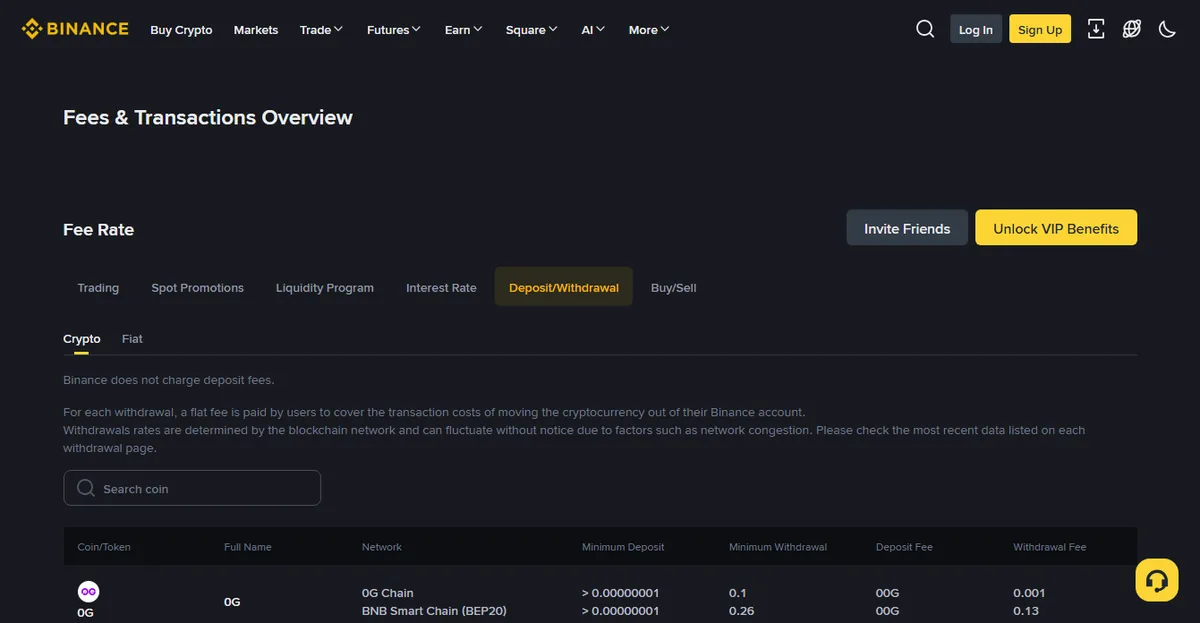
Beyond avoiding mistakes, the choice itself matters. Mainly in two ways: network fee and arrival time. Neither is fixed — on Ethereum you can see the current level on Etherscan’s gas page, and it moves minute by minute (checked 2026-09).
A transfer on the chain itself costs something, and that goes to the nodes doing the recording. It is a separate line from the trading fee you pay when buying or selling.
There is a distinction worth spelling out, because it is easy to blur: the number you see on the withdrawal screen is a fee the exchange sets per coin and per network — it is not the live on-chain cost. The two are usually in the same range, but an exchange can absorb a little or charge a little over, and the practice differs from coin to coin. It also moves with congestion and can run several times higher when the network is busy. What you will actually pay is whatever the withdrawal confirmation screen shows at that moment; do not work it out from a number you saw somewhere else.
The rough pattern is that older chains with contested block space cost more, while newer or payment-focused chains cost less. Arrival time follows the chain's block rhythm: Bitcoin around ten minutes a block, Ethereum around twelve-second slots, some chains faster still.
For actual figures, read what the withdrawal page shows at the time — that is the only accurate source, and it changes with network conditions.
For small transfers, prefer the cheaper chain; a few dollars of network fee on a hundred-dollar transfer is several percent. For large transfers the fee is negligible, so prefer the chain both sides know best and support fully. Reliable beats cheap once the amount is meaningful.
Why the chain names are such a mess
One of the more disorienting parts: the same chain can appear under completely different names on different platforms.
Several causes. Rebranding — some chains changed name and both versions linger. Token standard names used as chain names — what you are seeing may be the code for a token standard rather than the chain. Abbreviations alongside full names — some platforms spell it out, others use three or four letters.
The result is that you see one name on platform A and cannot find it in platform B's dropdown.
What to do
- Take the receiving side as authoritativeWhatever it says it supports, look for that on the sending side.
- Look at the address formatThe leading characters and length identify the chain family, and that is more reliable than a name. Pasting usually triggers automatic detection or an error.
- Look at the feeIf the fee shown for the chain you picked is an order of magnitude away from expectations, you probably picked wrong.
- If you cannot find it, use a different chainRather than fighting over names, pick one that is unambiguous on both sides. The time saved is worth more than the fee saved.
Turn checking into a fixed routine
- Go to the receiving side first, choose the asset and chain, and take the addressOrder matters — establish what the recipient supports before configuring the sender. Doing it the other way encourages you to make do.
- Write the chain name downCopy it or note it; do not hold it in your head. Names vary between platforms.
- Back on the withdrawal page, select the network first, then paste the addressSelecting first lets the system validate the format for you.
- Check the first and last six charactersThis defends against clipboard-swapping malware. Three seconds.
- The first time on any route, send a small testConfirm arrival, then send the real amount. A network fee in exchange for certainty is a good trade.
The fifth is the most useful advice in the whole article. It converts an irreversible operation into one you can rehearse.
The other field people miss: memo or tag
Some chains need more than an address — they also require a memo (sometimes called a tag or reference ID). This shows up on chains using a shared-address model.
On those chains, an exchange uses one deposit address for all users and relies on the memo to tell them apart. So omitting the memo means the money reaches the platform but cannot be attributed to you — it is not lost, but recovering it means a manual process, and that is not always successful.
Spotting it is easy: if the recipient gives you a string of characters alongside the address and marks it required, that is the memo. Not one character wrong, and never invented.
Confirming arrival
After sending, do not just watch the exchange's status field. Take the on-chain identifier and check it yourself.
- Find the transaction ID in your withdrawal historyUsually called a transaction hash or TxID, a long string.
- Open the block explorer for that chainPaste it into the search box.
- Read the status and confirmationsSuccessful with enough confirmations means the on-chain side is done.
- If the chain says done but the recipient disagreesThe problem is on their side. Handing them the transaction ID gets you much further than describing the issue.
The value of this step is that it settles responsibility. The chain is publicly readable, so nobody has to guess.
When it has not arrived, do not panic
Half an hour with nothing showing is easy to read as the money being gone. Often there is an explanation.
| Possible cause | How to confirm |
|---|---|
| Still confirming on-chain | Check the confirmation count in a block explorer; short of the requirement means it is still in transit |
| Sender still in risk review | The withdrawal record has not switched to sent, so it never reached a chain |
| Recipient requires manual crediting | Some platforms have extra steps for certain assets or larger amounts |
| Wallet not showing that chain's assets | Add the network or the token manually in the wallet; the funds may have been there all along |
| Memo omitted | Requires the recipient's manual recovery process |
| Wrong chain selected | Search the address on the other chain's explorer to see where the funds are |
Work through that order and you can usually narrow down where the problem is. What matters first is establishing where the money is on-chain — knowing that tells you who to talk to.
One more case: not using a chain at all
If the recipient is on the same exchange as you, many platforms support internal transfers — using their account identifier (email, phone or user ID) rather than an address. No chain, usually instant, usually no network fee.
It is the easiest option when both sides are on the same platform. The mechanism is the one described in exchange, wallet, chain: a bookkeeping entry in the platform's database, with nothing written to any ledger.
Nothing touches a chain at all.
Which chain should I use to withdraw USDT?
There is no universally best one; it depends on what the recipient supports. The rule is to confirm the recipient's supported chain first, then choose on the sending side. Small amounts favour a cheaper chain; large amounts favour whichever both sides support fully.
Can funds sent on the wrong chain be recovered?
It depends who controls the receiving address. Your own self-custody wallet, and you can usually locate them on the corresponding chain. An exchange deposit address, and it is usually very difficult; some platforms offer a paid recovery attempt with no guarantee.
Why is there a network fee at all?
A transfer on the chain costs something, and that part goes to the nodes doing the recording rather than to the exchange. But the number on the withdrawal screen is a fee the exchange sets per coin and network, and it need not equal the live on-chain cost. It also moves with congestion, so the same chain can cost very different amounts at different times — go by the confirmation screen.
My withdrawal has said processing for ages — is that normal?
It may be the platform's risk review, or it may be that on-chain confirmations are still accumulating. Find the transaction identifier in your withdrawal history and check its status in the chain's block explorer — if the chain shows it complete, the issue is on the receiving side.
Per-chain minimum withdrawals, withdrawal fees and supported networks were checked in 2026-08 against the Binance deposit and withdrawal fee page. Network fees move with on-chain congestion and the supported list changes — go by the figures the withdrawal page shows at the moment you send.